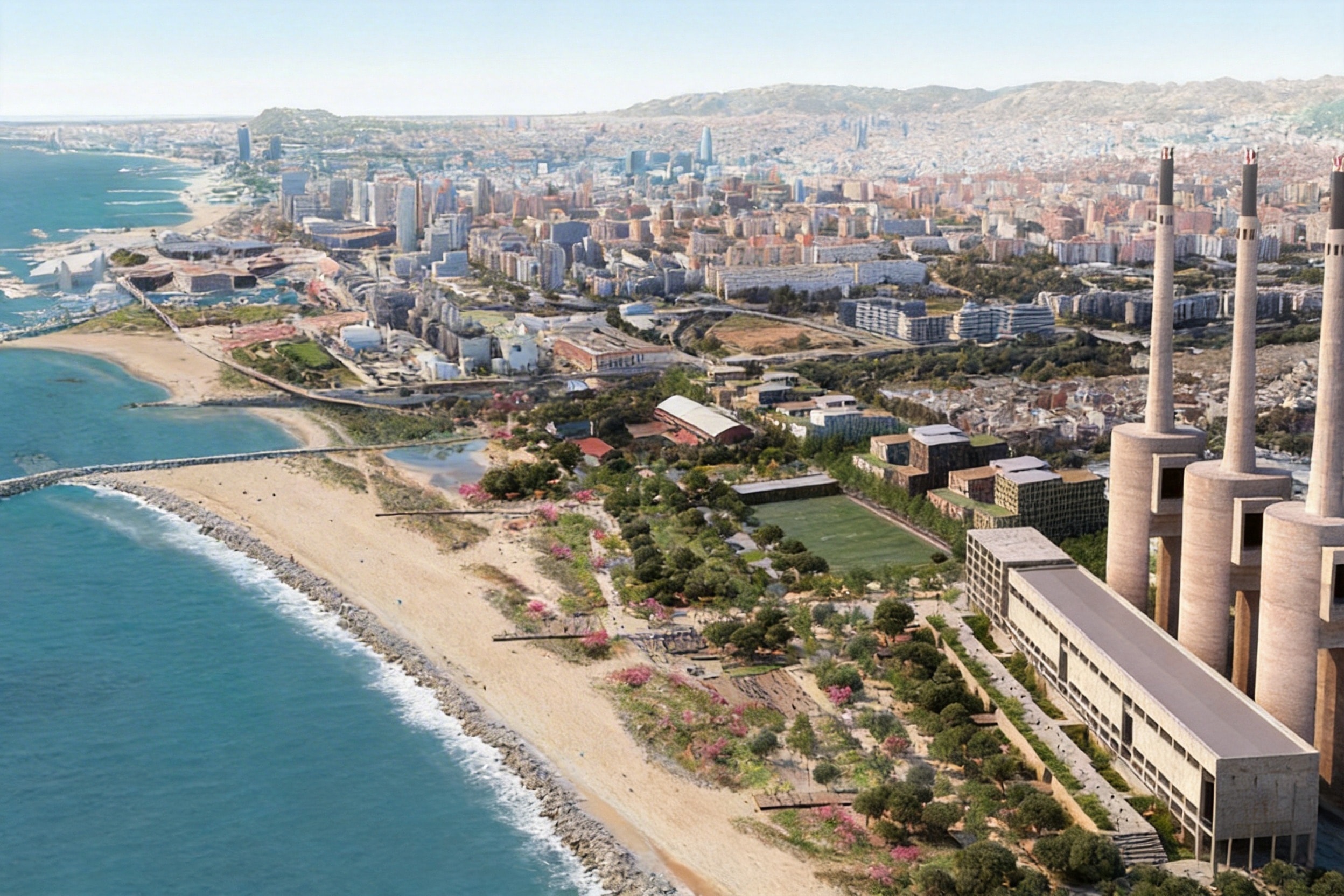
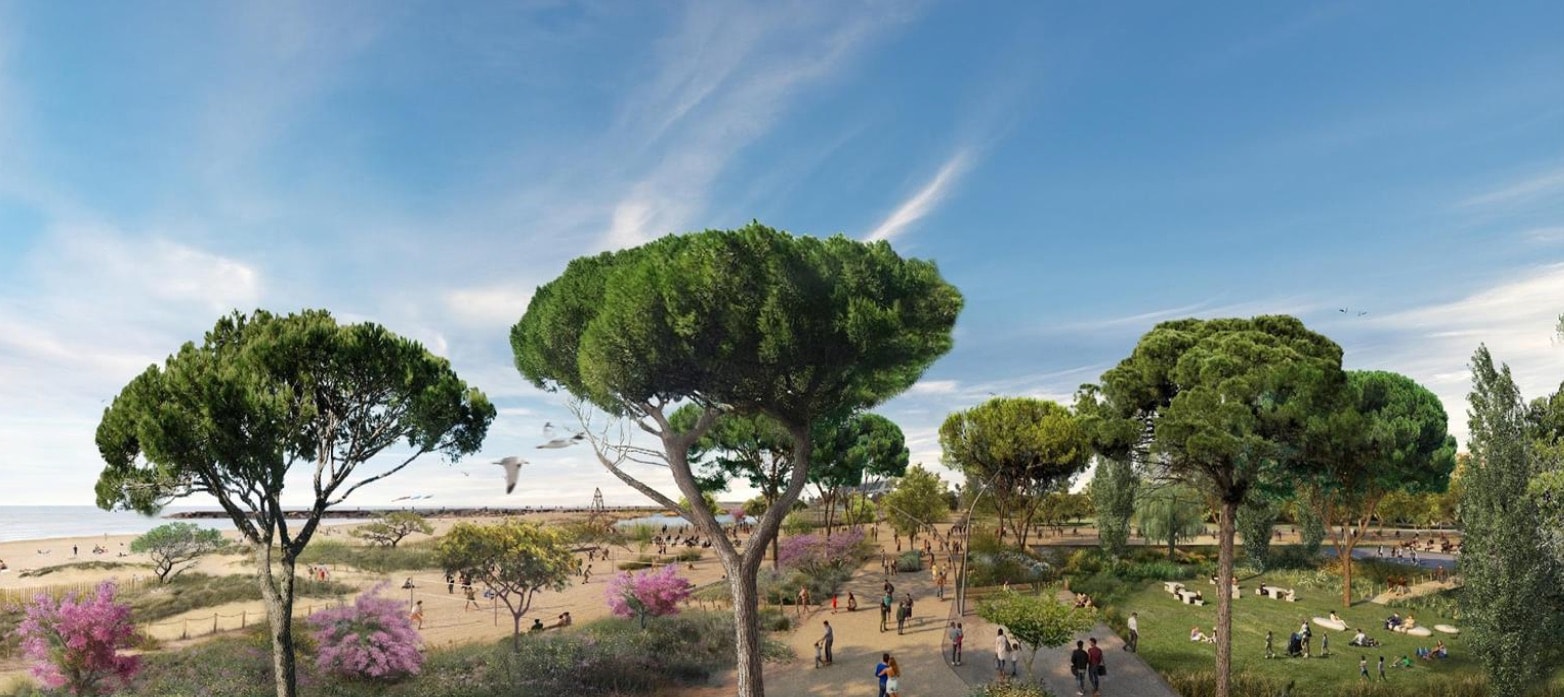
The resilient coastal park is conceived as an environmental infrastructure designed to address the risks associated with climate change and provide a vast climate refuge on a metropolitan scale. An area of nearly 90,000 m² will bring together nature, public space and metropolitan infrastructure, harnessing the dynamics of the delta to reclaim its ecological and social value and restore the balance between the city and its ecosystems. Its benefits include coastal protection, water regulation, carbon capture and improved microclimatic conditions, as well as social and health-related benefits such as better air quality, greater climate comfort and physical and mental well-being for residents.
Designed as the area’s key unifying element, the promenade is placed on a higher level to ensure the park is more resilient to extreme climate events. It acts simultaneously as protective infrastructure against coastal and river flooding, as a conduit for the Llevant wastewater interceptor, and as the park’s primary route. From this elevated promenade, a network of paths and public spaces connects the Besòs River Park with the coastline and the beaches of Sant Adrià de Besòs and Badalona, both transversally and longitudinally, reinforcing the continuity of the green and blue metropolitan corridor.
The integrated sustainable drainage system (SuDS) is designed to manage urban runoff, reduce peak flow levels, encourage infiltration and replenish the aquifers, reducing reliance on conventional drainage infrastructures. It includes rain gardens, permeable paving, vegetated swales, channels and infiltration basins. The meadow areas are set on slightly lower levels to act as rainwater retention and attenuation zones, connected to channels and the wider SuDS network.
The project includes an adaptive topographical strategy that shapes the landscape to respond effectively to flood risks and the increasing frequency of extreme weather events. Green slopes, which are subtlely integrated into the landscape, and the restoration of dune systems, strengthen the coastline’s capacity to absorb and dissipate energy. These features not only act as natural barriers against erosion and coastal storms, but also enhance the park’s ecological and spatial continuity, creating more gradual transitions between different areas and supporting the characteristic biodiversity of coastal ecosystems.
The park is designed to achieve a balance between public use and ecological conservation by creating zones based on how often they are used at different times. The more intensively used areas are found in the more accessible urban zones and main public spaces, while the areas closest to the river mouth and environmentally sensitive habitats are more natural. Street furniture, lighting and public amenities are adapted to the specific conditions of each area – taking into account flood risk, erosion and maintenance needs – and help shape patterns of use inside the park while lending it a coherent visual identity in terms of its landscape.
From an ecological perspective, the project promotes a habitat diversification strategy that takes advantage of the natural transitions between the river, delta and coastal landscapes of the Besòs. By combining variations in topography, hydrology, salinity levels and exposure to the sun, the project creates a patchwork of environments made up of tree-lined promenades, meadows, riverside woodlands, freshwater wetlands, channels, coastal lagoons, dune systems and multi-layered green spaces. This diversity of habitats supports native species adapted to the Mediterranean environment, strengthens the ecological connectivity of the metropolitan coastal corridor, and reinforces the area’s wider ecological network.