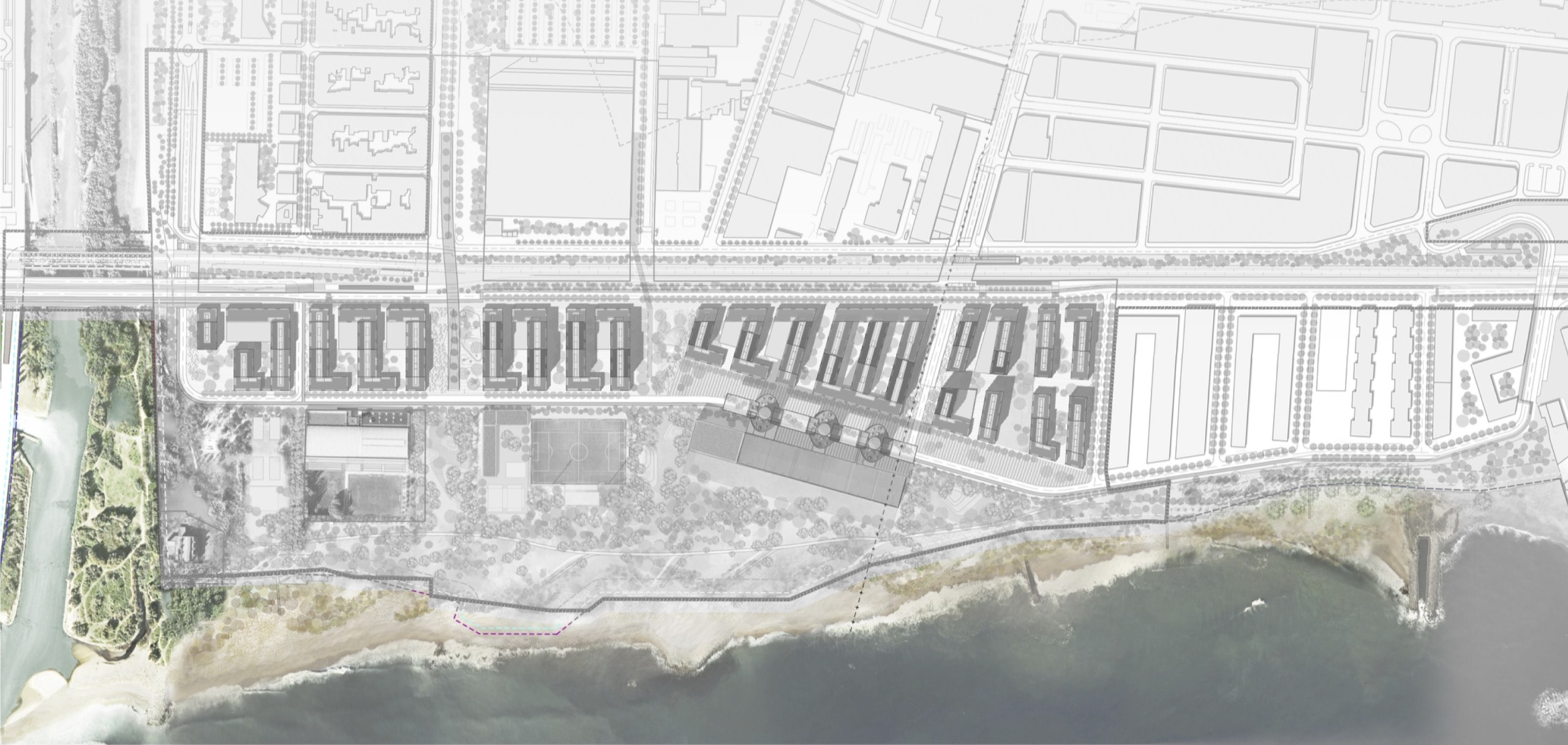
A raised linear structure designed as the project’s main unifying element, providing flood protection, infrastructure support and a fully accessible primary route connecting the riverfront with the coastline.
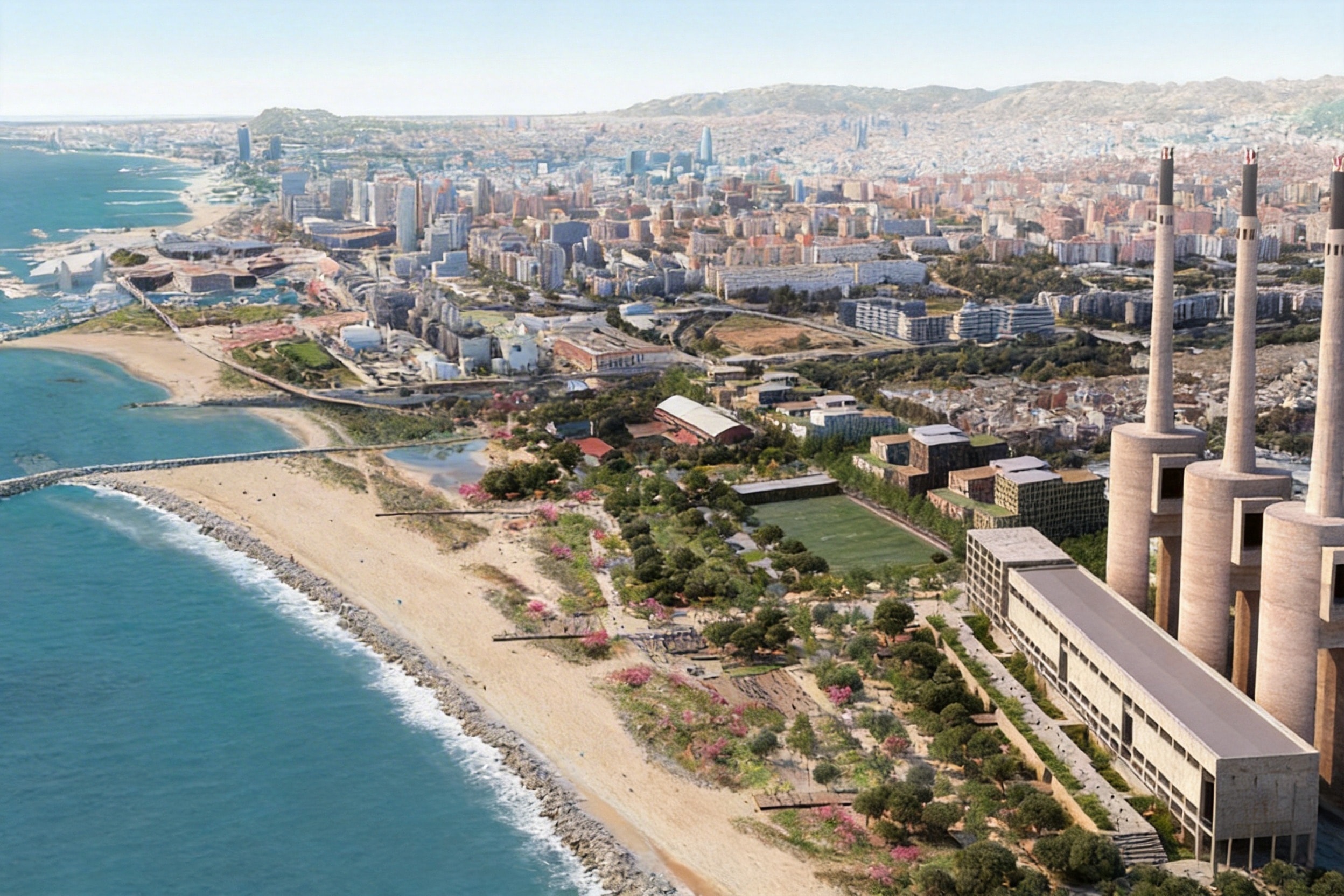
The Tres Xemeneies Urban Development Master Plan (PDU) is spearheading the transformation of the waterfront area between Sant Adrià de Besòs and Badalona into a new urban district approved by the Government of Catalonia in 2023.
The project reconnects the city with the sea by removing the barrier that has long separated them, creating new connections that integrate housing, economic activity, public amenities and open spaces into a new seafront neighbourhood.
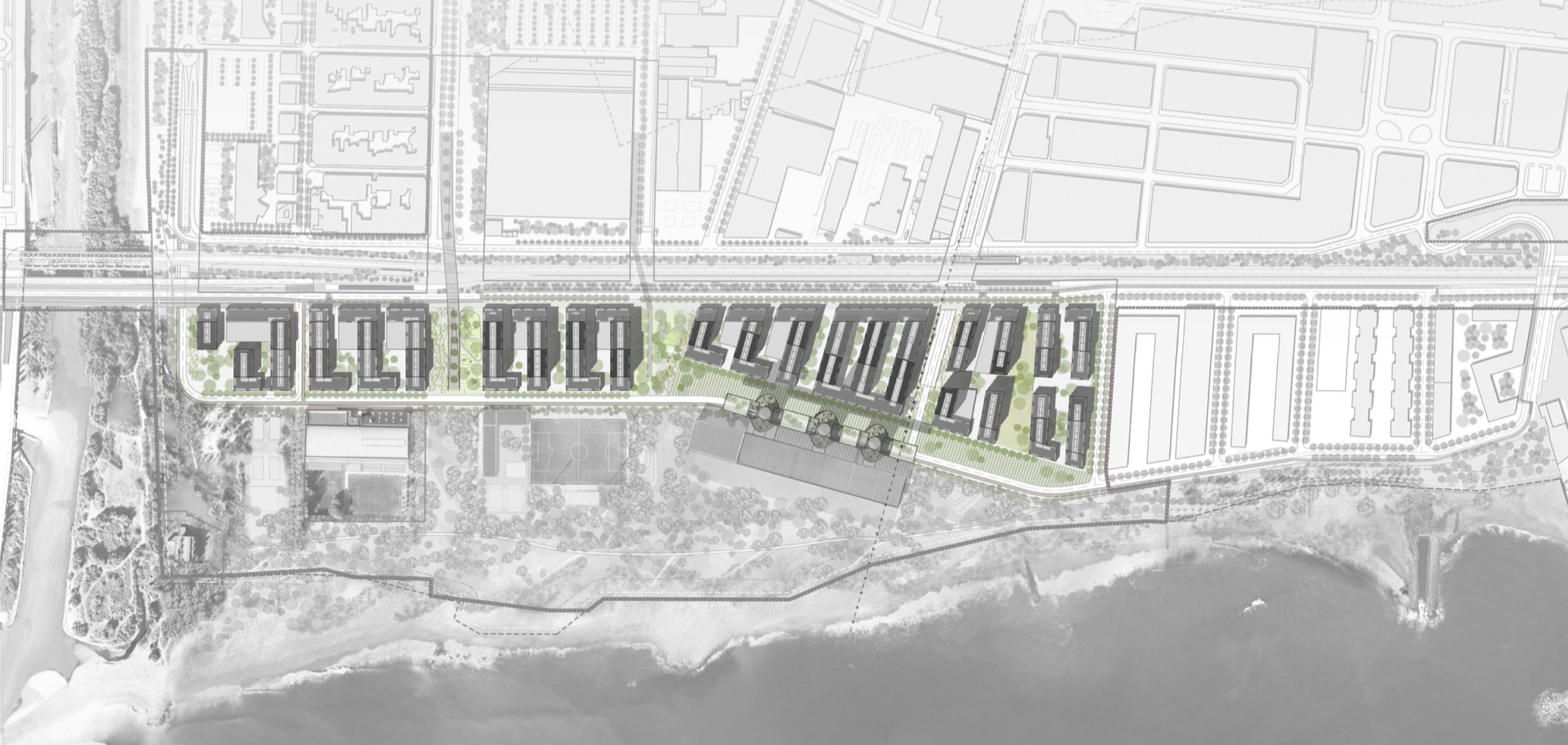
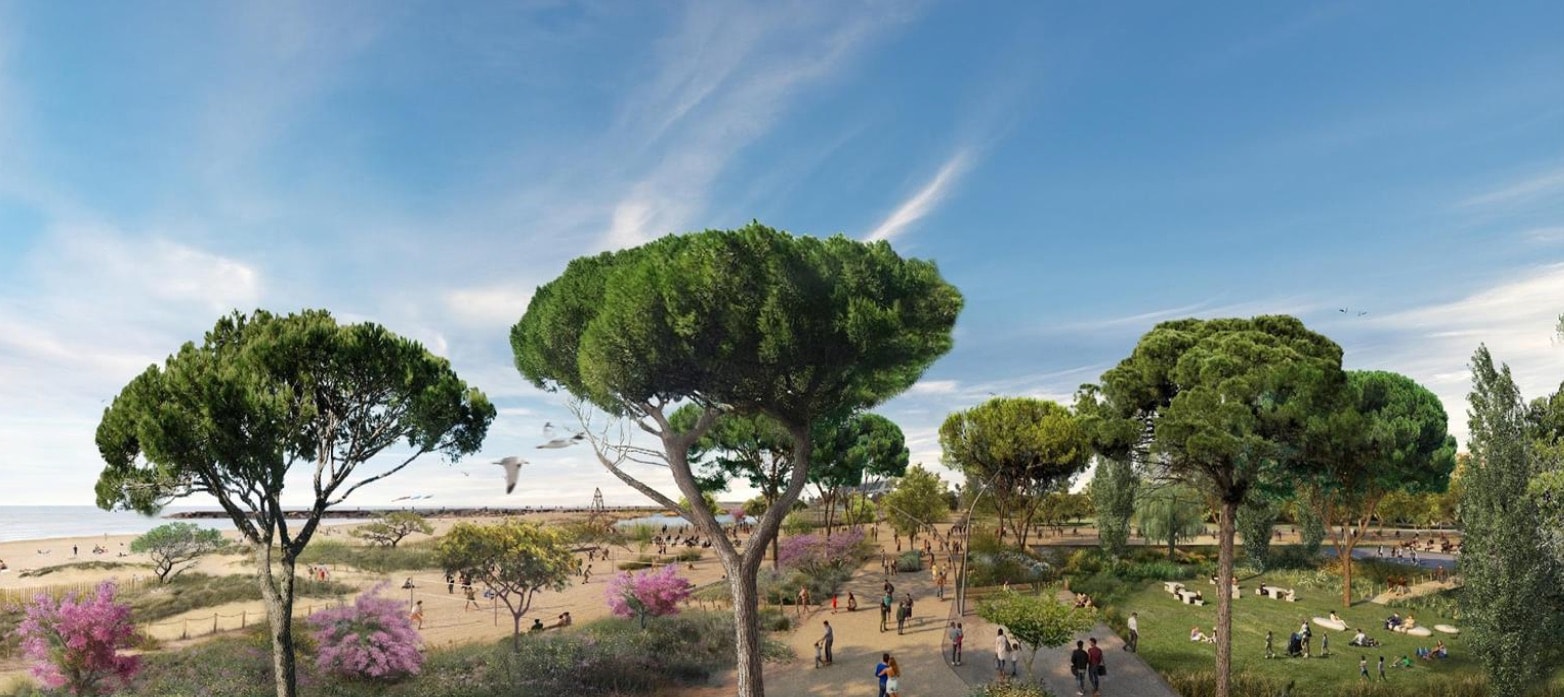
The urban plan prioritises public space, the continuation of the coastline and its relationship with the Besòs river, structuring the area through a network of parks, streets and open public spaces.
The project also incorporates climate resilience, water management and measures to improve the environment in order to regenerate one of the most iconic stretches of Barcelona’s metropolitan coastline.

The Tres Xemeneies Urban Development Master Plan (PDU) is spearheading the transformation of the waterfront area between Sant Adrià de Besòs and Badalona into a new urban district approved by the Government of Catalonia in 2023.
The project reconnects the city with the sea by removing the barrier that has long separated them, creating new connections that integrate housing, economic activity, public amenities and open spaces into a new seafront neighbourhood.
The urban plan prioritises public space, the continuation of the coastline and its relationship with the Besòs river, structuring the area through a network of parks, streets and open public spaces.
The project also incorporates climate resilience, water management and measures to improve the environment in order to regenerate one of the most iconic stretches of Barcelona’s metropolitan coastline.

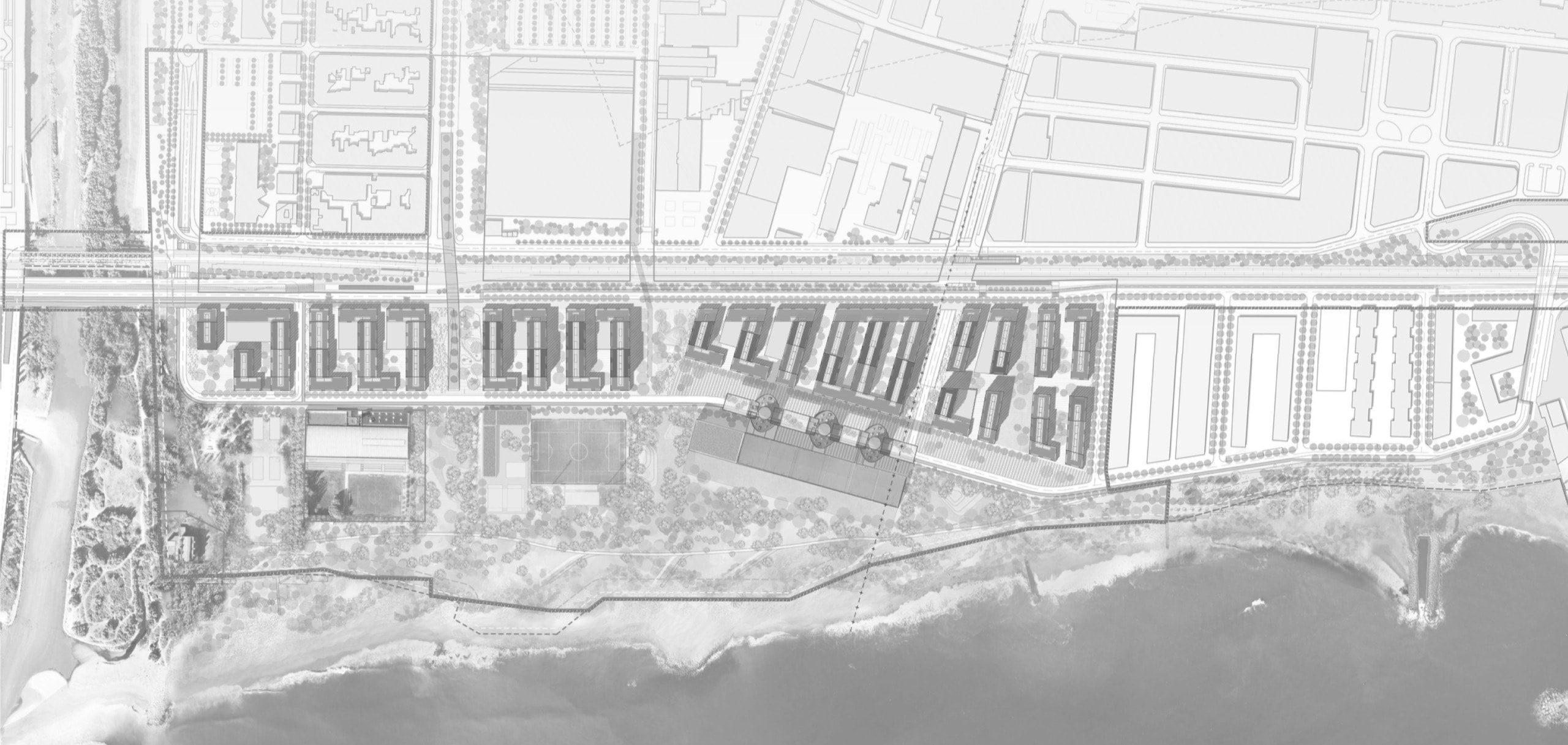
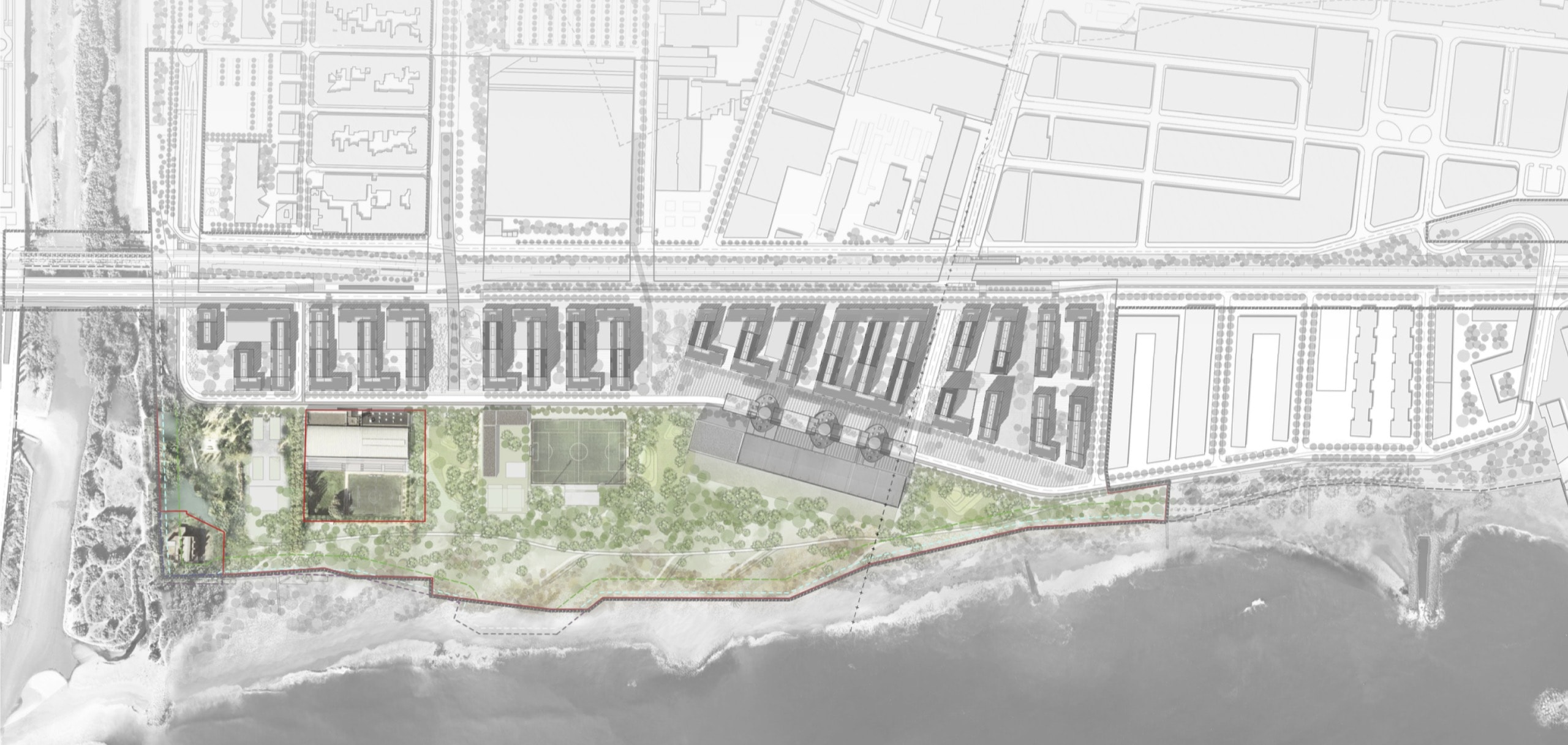
A raised linear structure designed as the project’s main unifying element, providing flood protection, infrastructure support and a fully accessible primary route connecting the riverfront with the coastline.
A SuDS-based system that captures and filters rainwater and regulates its harvesting, reducing runoff and improving aquifer recharge.
Topographical solutions designed to protect the coastline, manage flooding and create a seamless waterfront park environment.
The park is set out according to the different levels of activity, combining busier public spaces with natural and environmentally sensitive areas.
Creation of a patchwork of habitats that enhances biodiversity and strengthens ecological connectivity between the Besòs river corridor and the coastline.

Environmental regeneration and enhancement of this stretch of coastline for public use.
Creation of an uninterrupted coastal route linking Barcelona, Sant Adrià de Besòs and Badalona, providing a continuous public space connecting the entire waterfront area.
Relocation of the Llevant wastewater interceptor and other infrastructures to free up land, improve urban
Making the Besòs river an integral part of an environmental corridor, enhancing biodiversity and strengthening its connection with the new urban landscape.

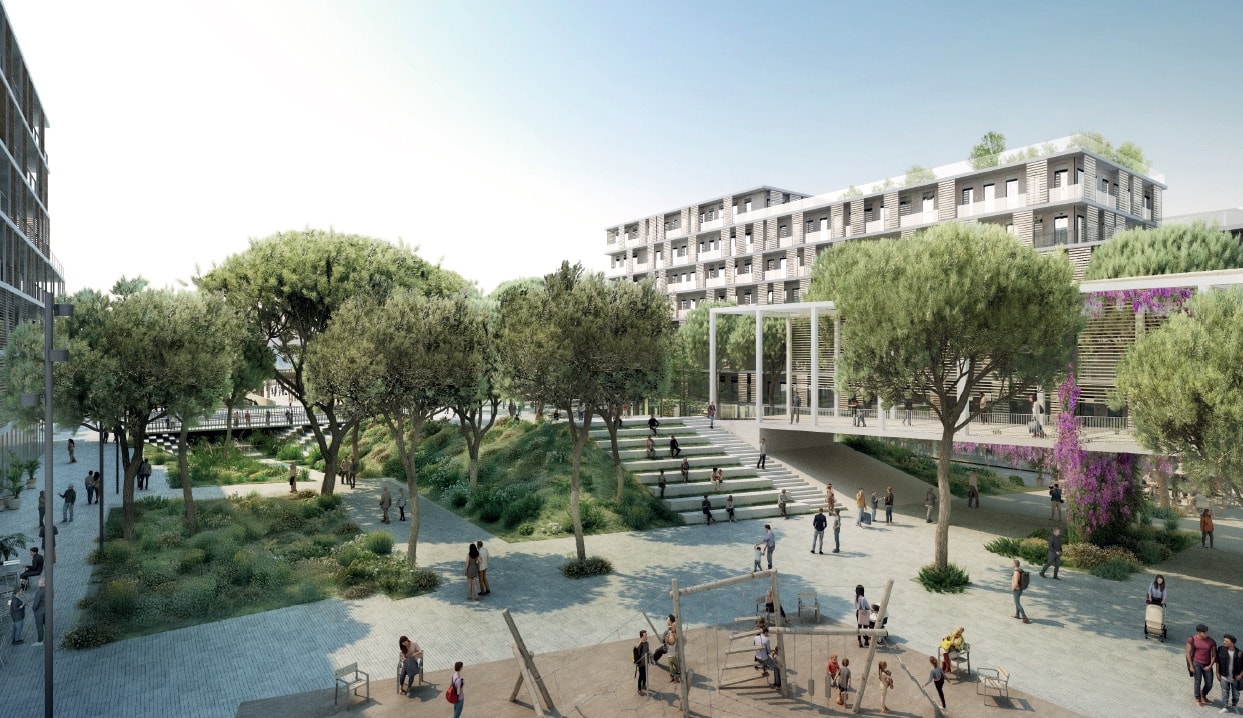
1,783 homes (at least 40% affordable housing) for more than 5,000 residents, with high-quality public spaces, services and public transport.
Open, medium-density housing blocks arranged to create a gradual transition from the seafront to the inland areas.
Integration of businesses, R&D and specialised training to foster innovation, create jobs and a competitive audiovisual hub.
Decontamination and environmental regeneration of former industrial land based on sustainability criteria.

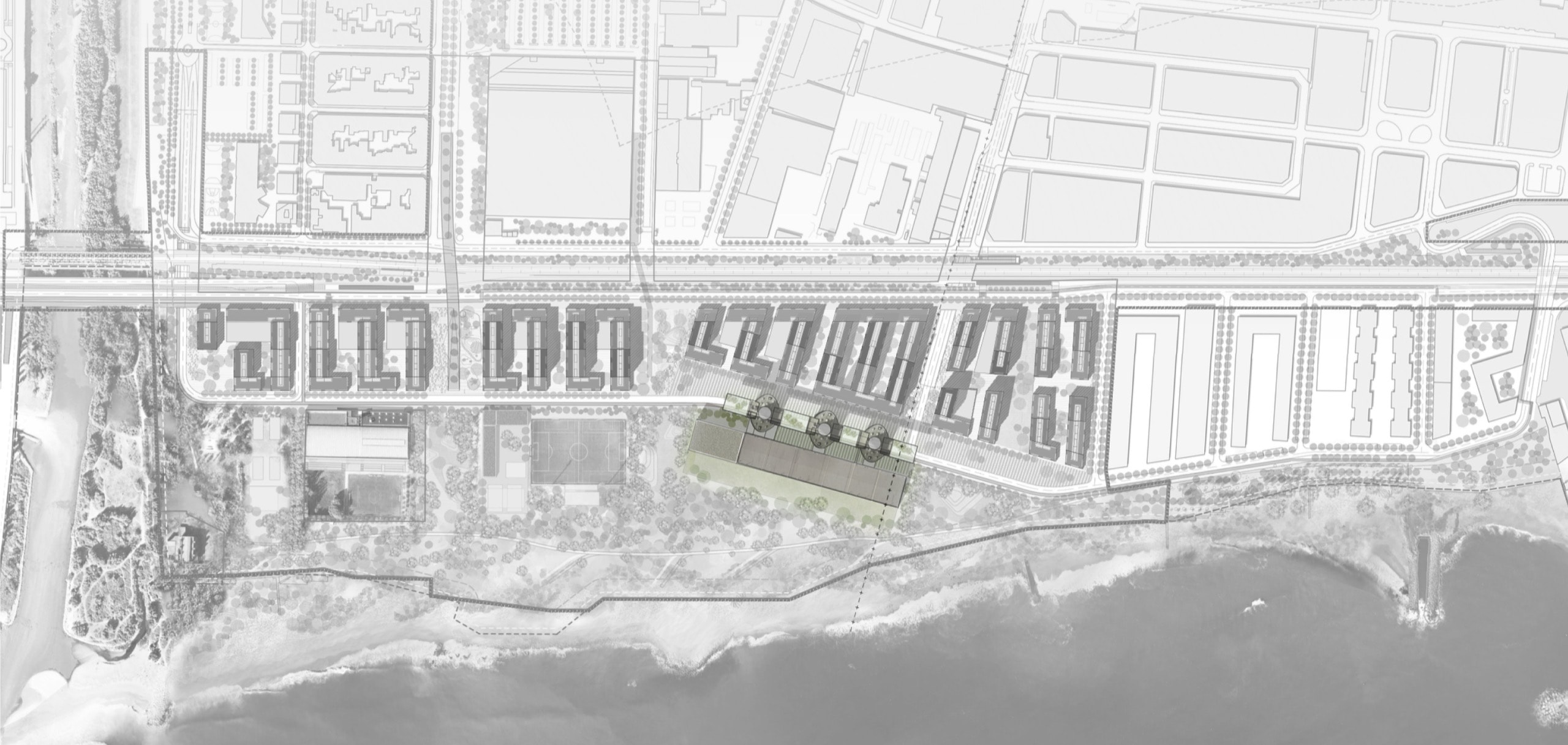
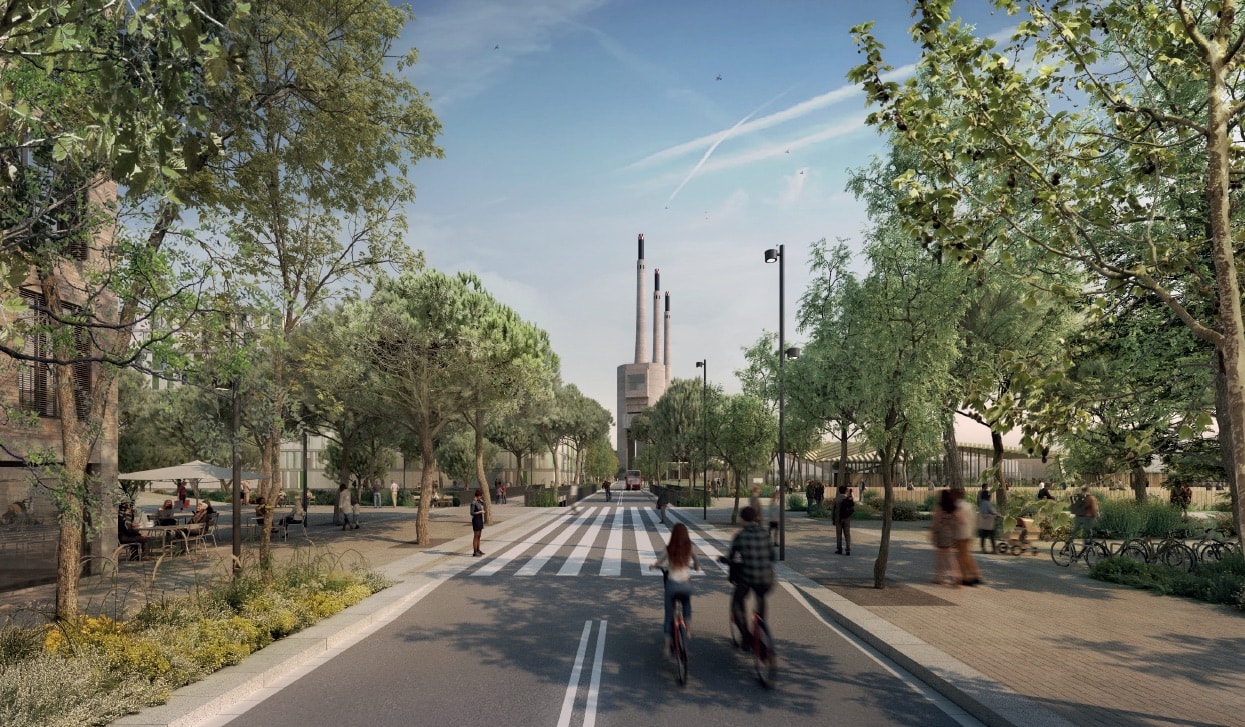
Preservation of this iconic power plant as a heritage landmark that defines the new district’s visual identity.
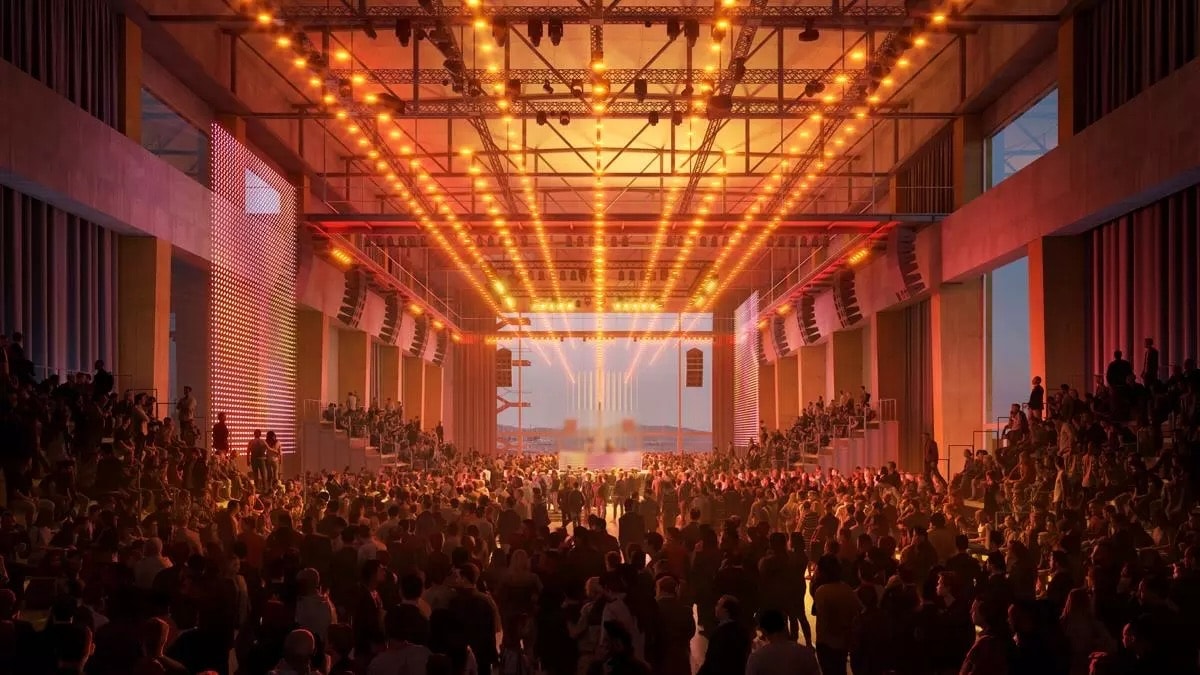
Transformation of the turbine hall into a state-of-the-art audiovisual facility with sound stages, creative spaces and event venues. The project also includes the immersive cultural installation Els Ulls de la Història (The Eyes of History), which preserves the memory of the area’s industrial past.
Integration of businesses, R&D and specialised training to foster innovation, create jobs and a competitive audiovisual hub.
Creation of public spaces, new connections with the waterfront and a cultural programme designed to make the hub an integral part of the city.

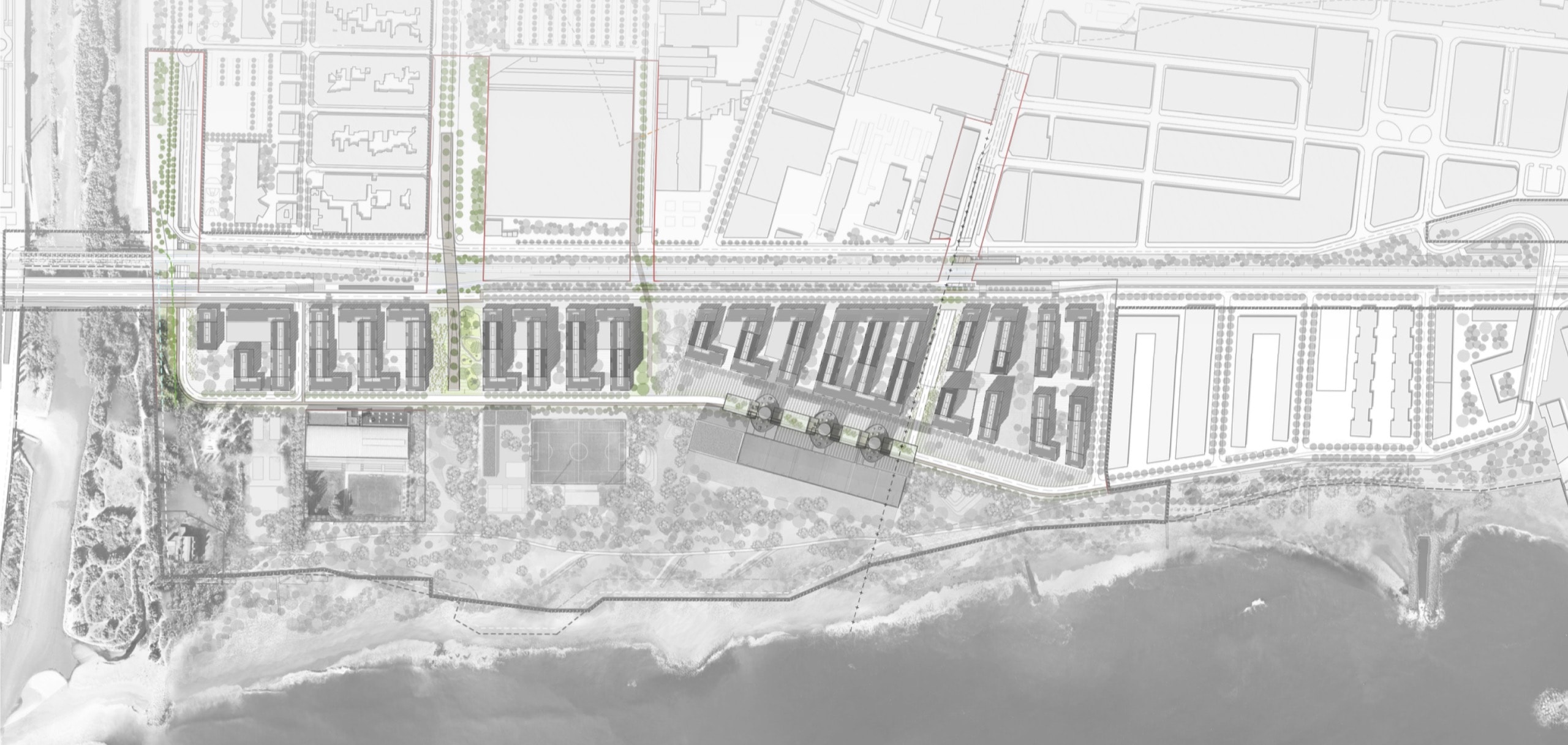
A complete, coherent and well-structured street network that guarantees accessibility, urban continuity and seamless connections for pedestrians and cyclists.
New underpasses, footbridges and street extensions designed to overcome existing barriers and improve connectivity with the surrounding area.
Implementation of modern infrastructure networks (separate sewer systems, water, energy and telecommunications) using sustainable solutions placed underground.
Measures to address flooding, sustainable drainage solutions, and the use of native plants and trees to improve the area’s climate resilience.
Expansion of bus services, improved access to the commuter rail (Rodalies) and metro network, and integration of the tram network with new stops across the district.