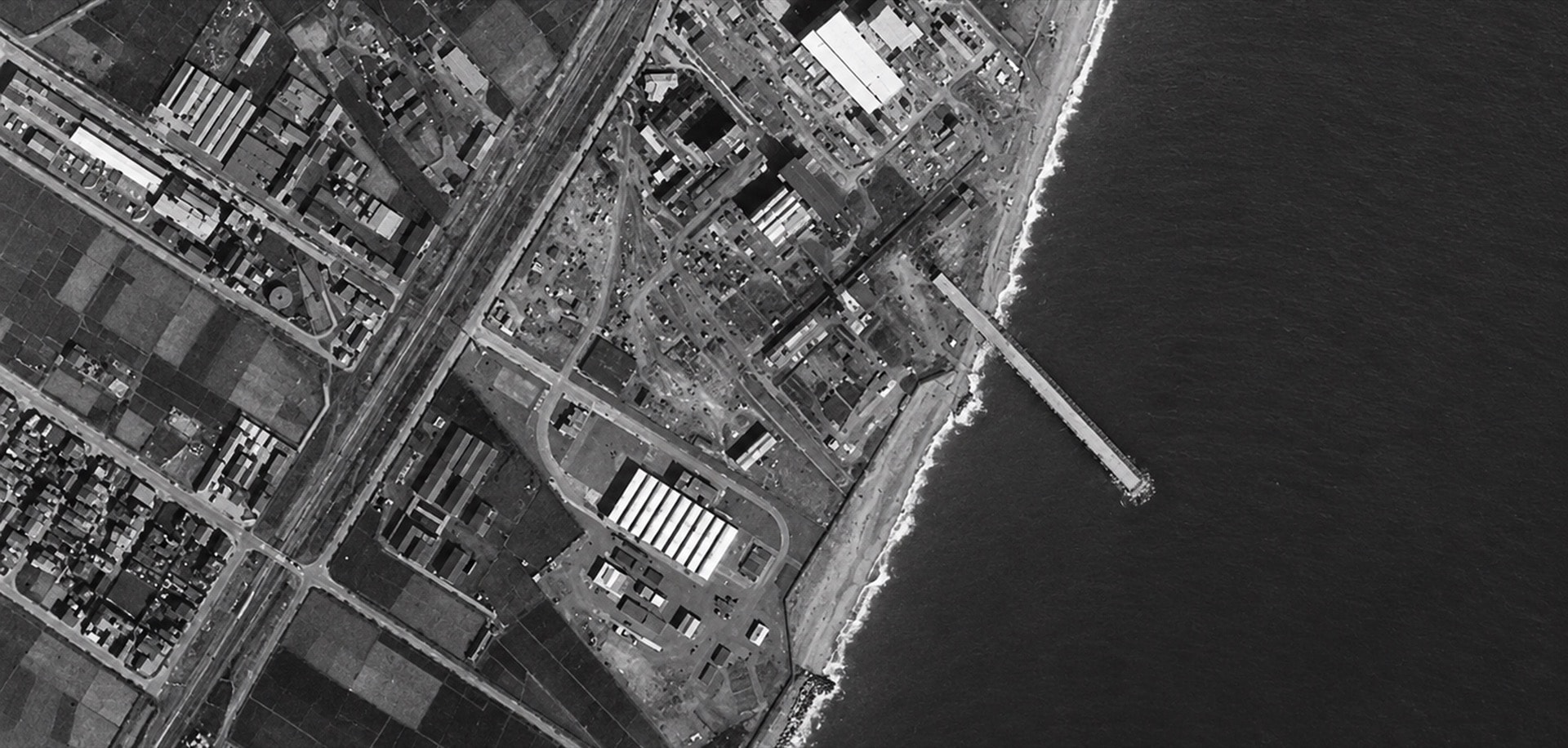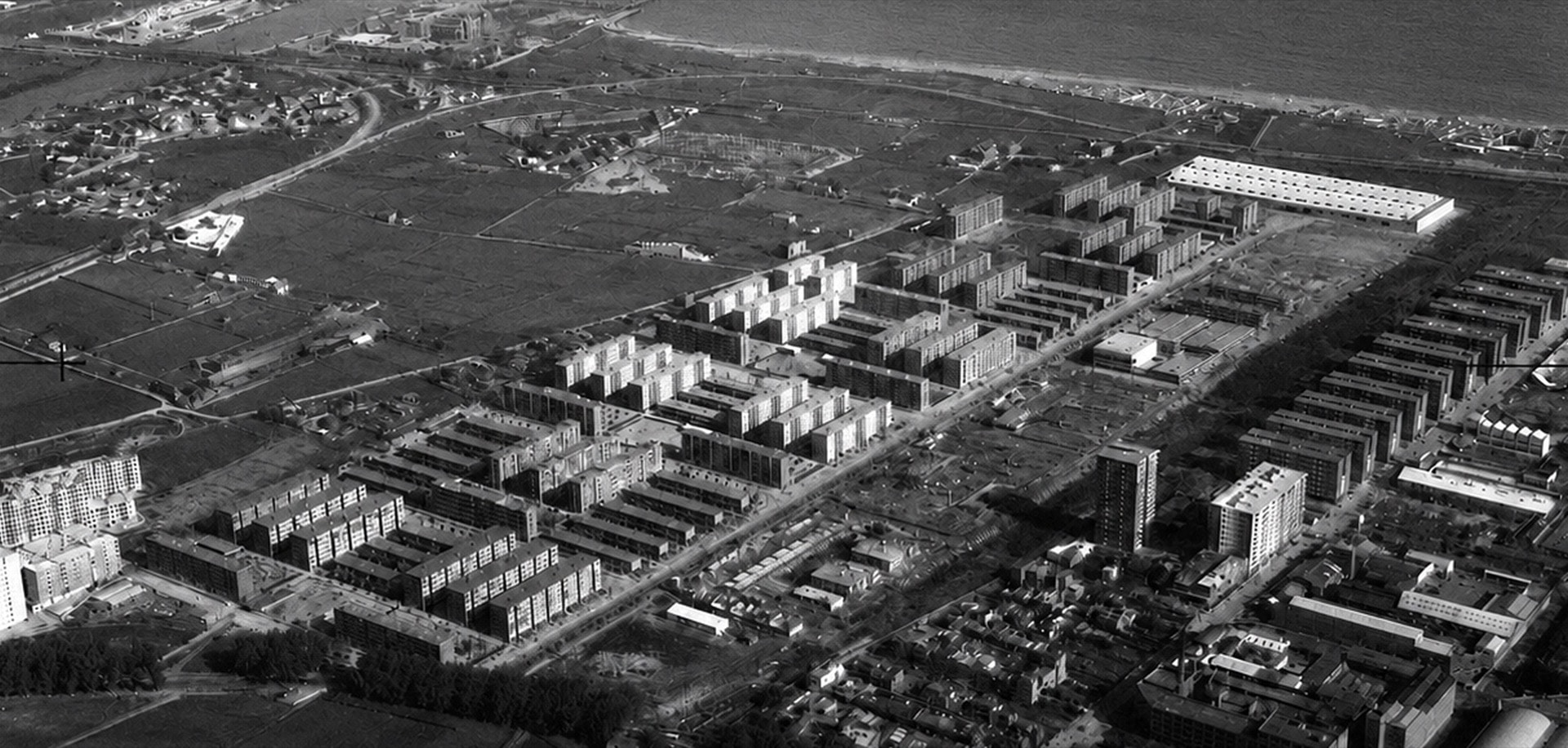
Between 1954 and 1964, a large-scale residential development was built throughout the Besòs i el Maresme district on land that had previously been used for agriculture. The project catered to the need to rehouse the incomers from the rest of Spain who were living in shanty settlements – particularly Somorrostro – as part of the emergency housing policies being implemented at the time. The blocks of flats were built before the area had the necessary infrastructure and public amenities. These were introduced at a later date as a result of sustained community activism and protests. This process transformed the irrigation channels and fertile farmland into a built-up urban landscape, marking the beginning of a deep-seated transformation of the coastal and metropolitan landscape.