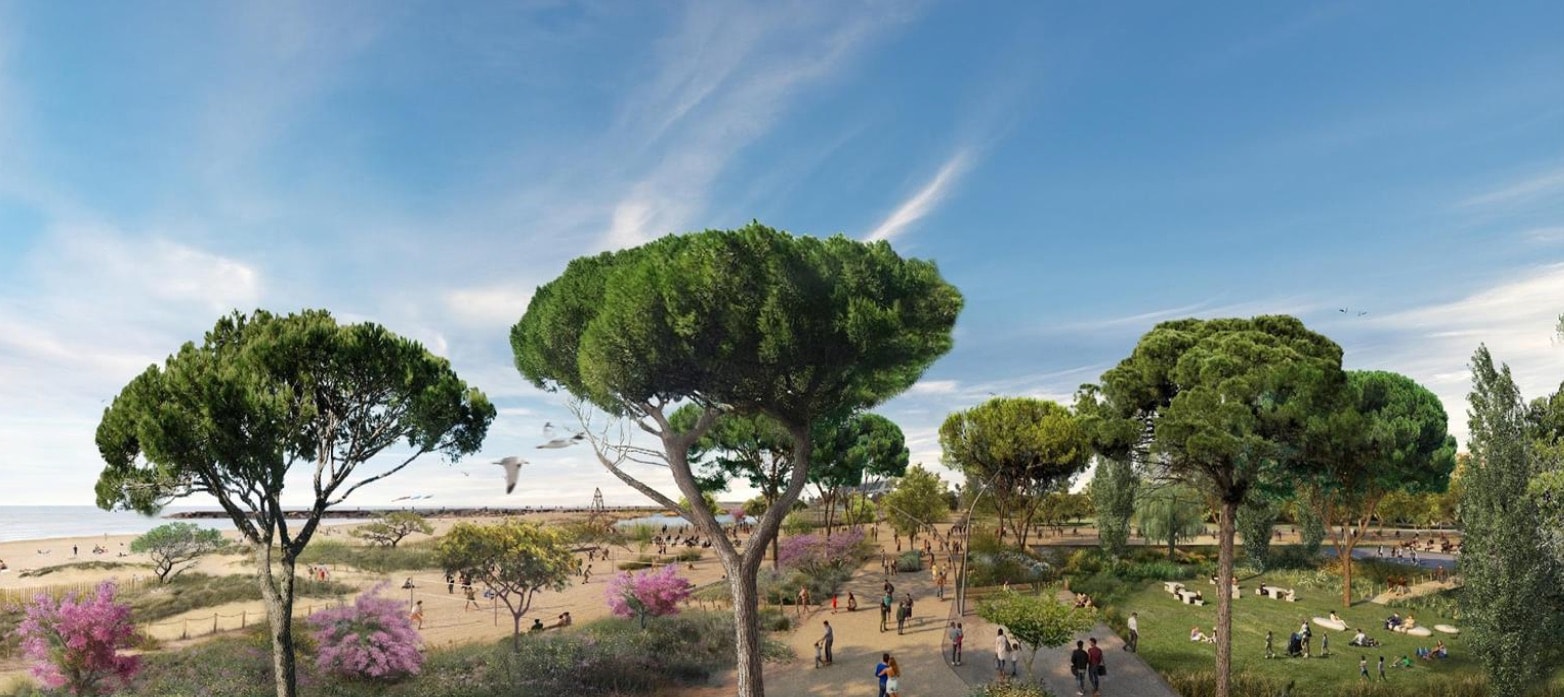
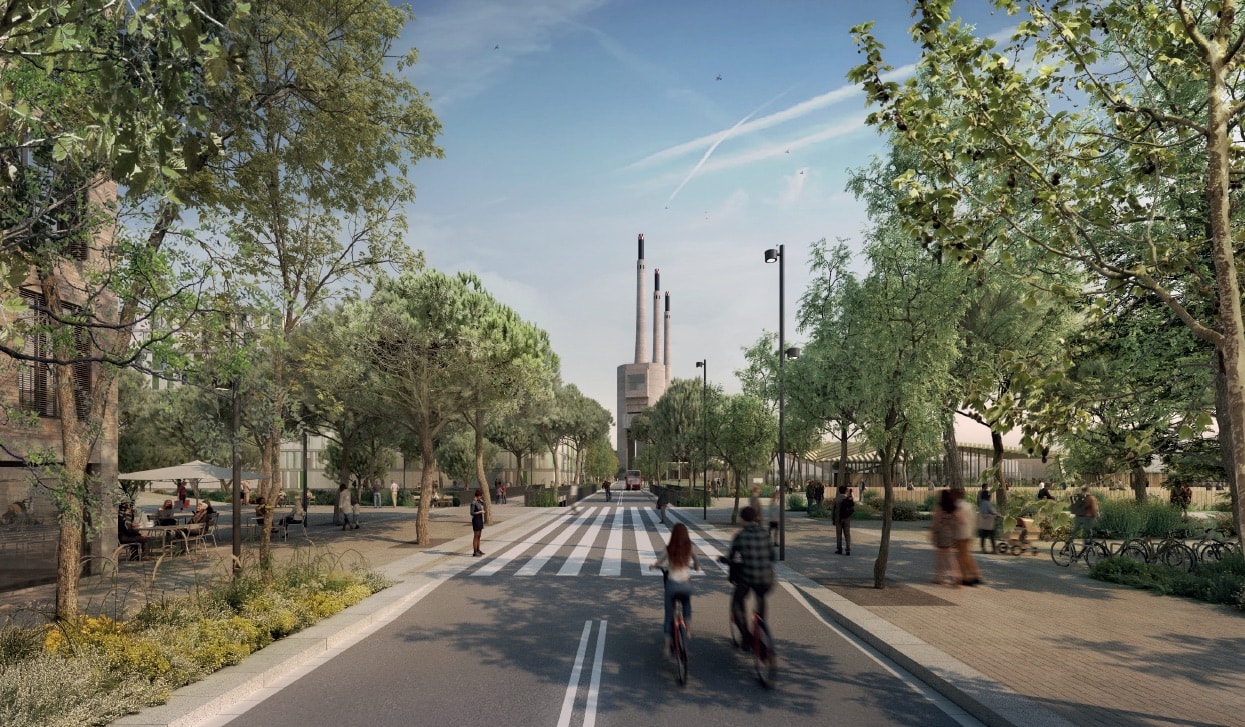
Covering an area of 93,225 m², the urban regeneration project for the Front Litoral Sector in the Tres Xemeneies area implements the planning framework for this site located between Sant Adrià del Besòs and Badalona by building a road network, urban infrastructure and the connections required to make it an integral part of the existing urban fabric. The plan lays out a new network of streets and public spaces connecting the new neighbourhood with the surrounding districts and the seafront. It also establishes a sustainable mobility model, with particular emphasis on public transport, guaranteeing universal accessibility and the regulation of parking. The intervention will also reorganise the sector’s central corridor in order to improve urban permeability between Badalona and Sant Adrià del Besòs.
The urban development strategy is designed to ensure accessibility and continuity with the surrounding urban fabric, seamlessly connecting pedestrian and cycling routes with the existing neighbourhoods and integrating the new development into its wider context. The proposal completes the sector’s road network by building new streets around the new plots and connecting them to the existing road network. Different types of streets and promenades are established according to their width and function, each with their own specific treatment of paving, landscaping and street furniture. Roadways are reserved for vehicular traffic and public transport, while pedestrian and cycling routes are clearly differentiated with segregated cycle lanes connected to the wider urban network.
The project includes a new underpass beneath Avinguda del Maresme, which will improve connections with Badalona, as well as two bridges for cyclists, pedestrians and service vehicles connecting the sector with Avinguda de la Platja and Carrer de Ramon Viñas and overcoming the barrier created by the railway line. The intervention also includes the extension of Carrer de Dolores Ibárruri to Passeig del Mare Nostrum and the redevelopment of the seafront side of Avinguda Eduard Maristany, where the tram line will be integrated into the streetscape and the metropolitan cycle network expanded.
A separate sewer system will be developed as part of the project. It will manage wastewater and stormwater independently and incorporate sustainable urban drainage systems. New underground networks for the provision of drinking water, electricity, telecommunications and gas will also be built. The waste management systems are designed to be fully integrated into the public space.
The project includes measures to manage flood risk in the area. These include raising selected roads above flood level, enlarging sections of the drainage system to improve water runoff and retaining existing infrastructure that is part of the drainage system. These interventions are complemented by integrating sustainable drainage solutions into public space. The intervention also includes landscape and environmental criteria, with the design of open spaces and the introduction of native species of plants and trees.
A coordinated package of interventions is planned to improve accessibility and intermodality. The network of metropolitan bus routes operated by AMB and TMB will be expanded to serve the new area. Accessibility to the commuter rail (Rodalies) network will also be improved with the redevelopment of pedestrian and cycling routes to Sant Adrià de Besòs station. The Trambesòs line will also be integrated into the new development with the creation of two new stations as part of its extension from Sant Adrià to the Port of Badalona.